
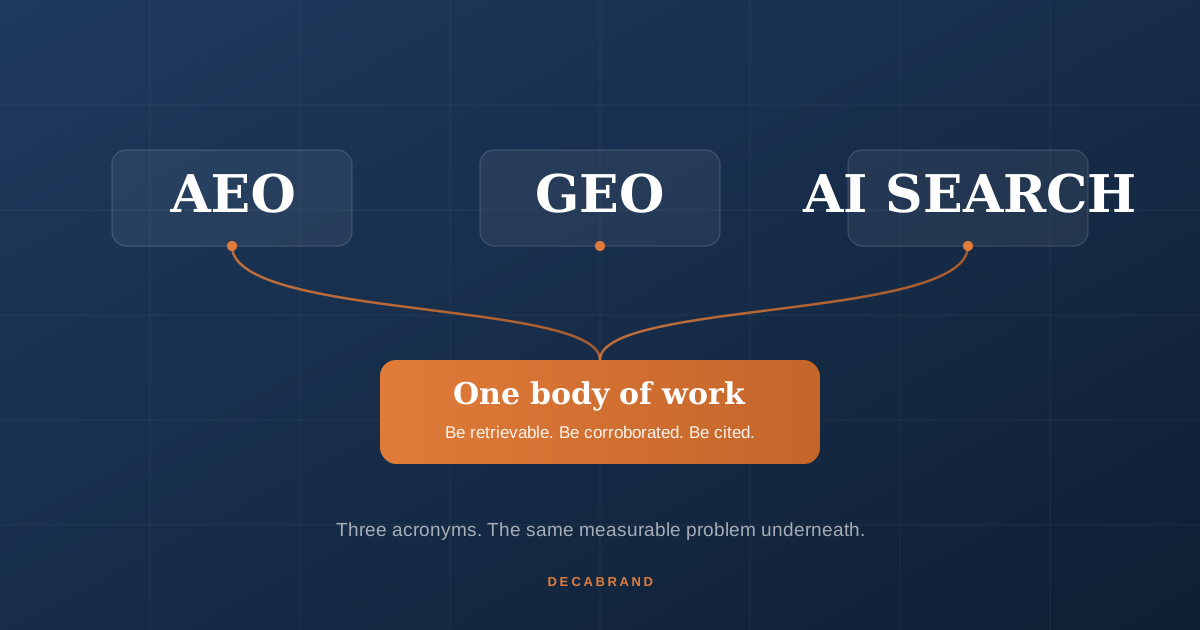
Three labels are circulating for roughly the same body of work.
AEO, answer engine optimization. GEO, generative engine optimization. And plain AI search, which is what most people actually say out loud. Vendors pick one and use it consistently, which creates an impression of meaningful distinction that does not survive reading two of their service pages side by side.
Here is the honest position: the vocabulary has not settled, the differences between the terms are mostly stylistic, and the label a vendor chooses tells you almost nothing about whether they can do the work. There is one question that does tell you, and it is at the end of this article.
What the three terms are trying to name
All three describe the same shift. A patient who used to type a phrase into a search box and receive ten links now increasingly asks a question and receives one answer. The competitive unit changes from a position in a list to presence in a paragraph.
That change breaks a familiar promise. There is no "number one" in a generated answer. There is being named, or not being named, and the same question asked slightly differently, or from a different location, or on a different day, can produce a different result.
Answer engine optimization tends to be used by people who came from technical SEO. It emphasizes structured data, entity consistency, FAQ content and directory presence. The work is real and mostly familiar.
Generative engine optimization tends to be used by people emphasizing the content side: substantiation, citations, and being the kind of source a model draws on. Also real, also mostly familiar.
AI search is what the market actually says. When we audited healthcare marketing agencies across dental, aesthetics and plastic surgery, the ones with a genuine offering overwhelmingly used this phrase or simply named the systems. Almost none used AEO or GEO at all, which is worth knowing if you are searching for a vendor using the acronyms.
What the work actually consists of
Strip the labels away and there is a short list, none of it exotic.
Make the practice resolvable as one thing. Consistent name, address, providers and services across your site, your Google Business Profile and the directories that get read. A system cannot recommend a practice it cannot resolve into a single entity. This is the least glamorous item and usually the highest yield.
Answer the questions that are actually asked. Not the keywords with volume. The questions: what does this cost, how long is recovery, is it covered, who does it, am I a candidate. Practices that answer these publicly give a system something to repeat. Practices that avoid them get represented by whoever did not.
Substantiate what you claim. Credentials, affiliations and outcomes that can be corroborated against sources outside your own website. Corroboration across independent sources is what moves an entity from known to recommendable.
Do not block the crawlers you want. Publishers who want their content considered by these systems should not be disallowing the relevant crawlers. It is worth actually checking rather than assuming, because we routinely find practices blocking systems they are simultaneously paying to appear in.
That is most of it. It is not mysterious and it is not new. Which raises the fair question of why anyone should treat it as a distinct service.
The part that is genuinely different
Measurement.
Traditional search work has an established reporting vocabulary. Positions, impressions, clicks, sessions. Imperfect, but standardized enough that two vendors reporting on the same site would produce recognizably similar numbers.
Answer-engine work has no such convention, and the gap has been filled with assertion. A practice is told it is being optimized for AI search and receives, at intervals, a description of tasks completed. Schema added. FAQs written. Directories claimed. All inputs. None of it answers the only question the practice actually has, which is whether any of it changed what a patient sees when they ask.
This is not a hypothetical complaint. Across the healthcare marketing agencies we have audited, several sell AI search visibility as a named service line. We have not yet found one that publishes a measurement method, an example report, or a single before-and-after result. The category has a claim and no evidence layer.
What a measurement looks like
It is not complicated, which is part of why the absence is notable.
Fix a set of questions a real patient would ask, in the words they would use. Run them across the systems that matter, naming them rather than saying "AI." Record whether the practice was named, and when it was not, record who was. Note the date, the location context and the settings, because all three affect the answer. Then run the identical set again later and compare.
That produces a document with a date on it, which a skeptical reader can check by running the same questions themselves. It is a lower bar than it sounds and almost nobody clears it.
Two things worth being careful about
Nobody can guarantee a recommendation. Not us, not anyone. Answers vary with phrasing, context, location and time, and the systems change without notice. A vendor promising guaranteed inclusion is describing a mechanism that does not exist.
Be wary of confident usage statistics. You will see percentages for how many patients now use AI assistants to choose a provider. We have looked for a credible independent source for healthcare specifically and have not found one. Every figure in circulation traces back to a company selling the service. The honest argument for doing this work does not need a fabricated number: measurement is cheap, entity and content work compounds, and the cost of being early is low while the cost of being late is not.
The question that separates vendors
Not "do you do AEO." Everyone will say yes.
Ask instead: where does my practice stand today, in which systems, measured how, and on what date?
A vendor doing the work has a document, or can produce one before you commit to anything. A vendor selling the category has a service page. That distinction is worth more than any of the three acronyms.
Questions this article answers
What is the difference between AEO and GEO?
In practice, very little. Answer engine optimization and generative engine optimization are used almost interchangeably to describe work that makes a business discoverable, accurate and well supported enough that AI systems can represent it. Neither term is standardized, and most vendors use one or the other by preference rather than to mark a real distinction.
Is AEO just SEO with a new name?
The underlying work overlaps substantially, and any vendor who tells you it is entirely new is overselling. The genuine difference is what gets measured. Traditional SEO reports positions and traffic. Answer-engine work has to report whether the business was named in a generated answer, in which systems, and next to whom.
How do I tell whether a vendor actually does this work?
Ask for a baseline: the questions they tested, the systems they tested in, the date, and whether your practice was named in each. If the answer is a service description rather than a document, they are selling the category rather than the work.
Part of the Healthcare Search Visibility collection
How patients discover practices across local search, Google Maps, AI answers, directories, and branded search.
Explore the topic hub